Ferns are nonflowering vascular plants that reproduce by spores. As a group, ferns date back to the Carboniferous period, 359 million years ago.
The spore-producing structures on a fern are called
sporangia. Clusters of sporangia on the underside of fern fronds are called
fruit dots or
sori.
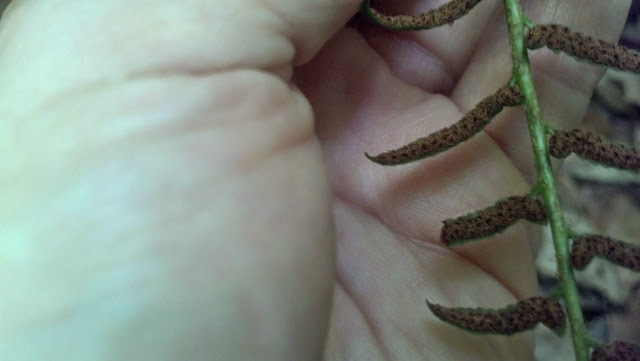 |
| Fruit dots |
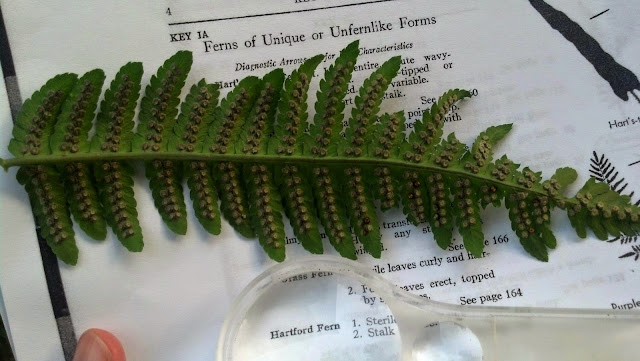 |
| More fruit dots |
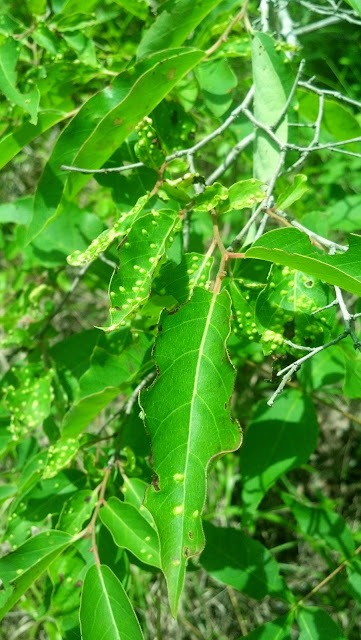
Very few herbivorous mammals eat ferns. A cover of ferns can actually be a sign of ecological imbalance, indicating that too-numerous deer have eaten all the rest of the plants. Some insects, however, make use of ferns for shelter, as in the picture below.

Some ferns also have a mutually beneficial relationship with insects--the Bracken Fern, for instance, is protected by ants that eat a liquid it produces.
------------------------
On June 28th, the Wildflower Certification class took a walk at Flint Woods preserve in Hockessin to look for ferns. These are some of what the group found:
Silvery spleenwort (Deparia acrostichoides) is a twice-cut fern with blocky pinnules.
 |
Silvery spleenwort
|
Hay-scented fern (Dennstaedtia punctilobula) is a thrice-cut fern that can grow to two feet.
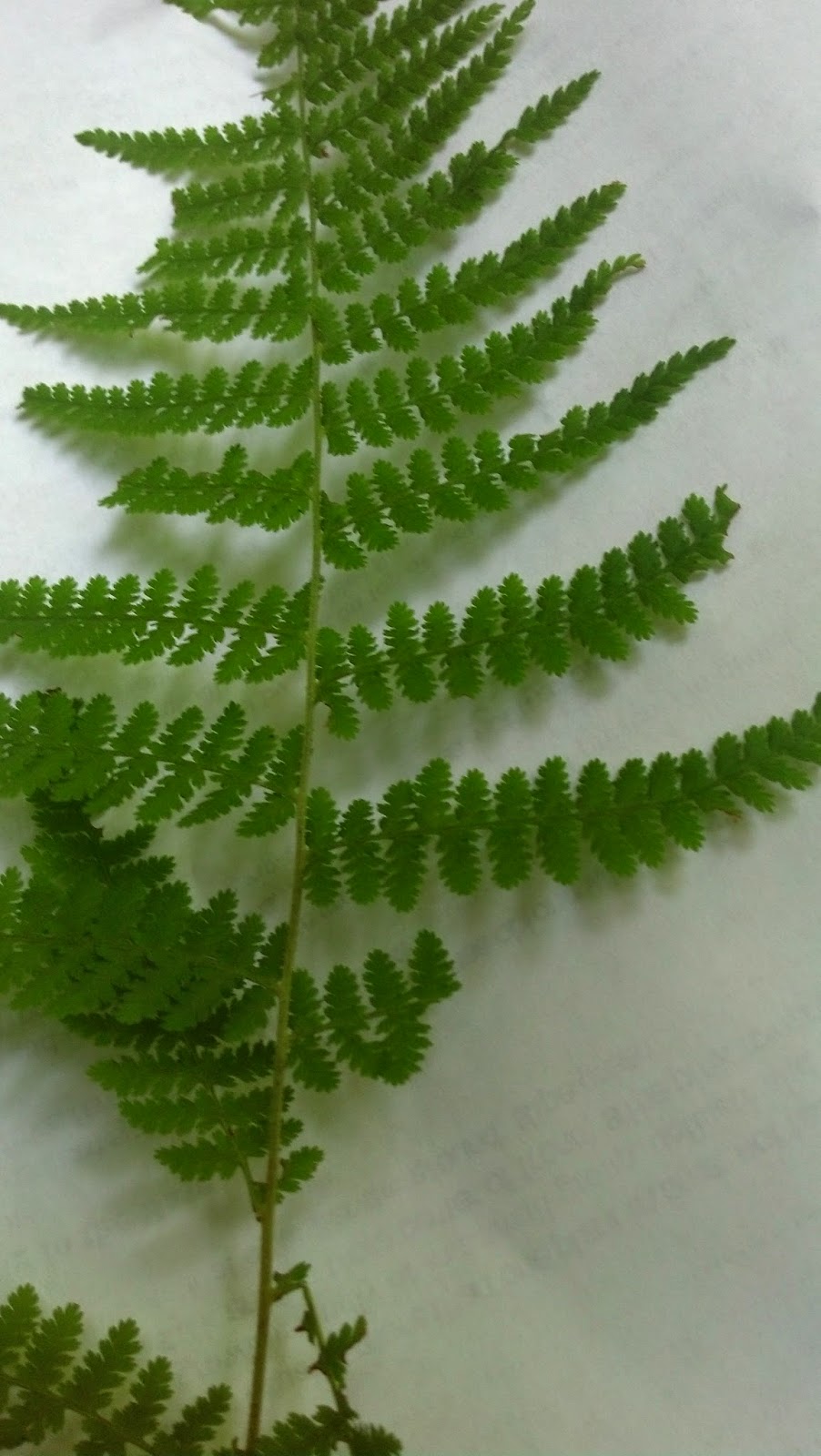 |
| Hay-scented fern |
Interrupted fern (Osmundia Claytoniana) gets its name because the fronds in the middle are missing.
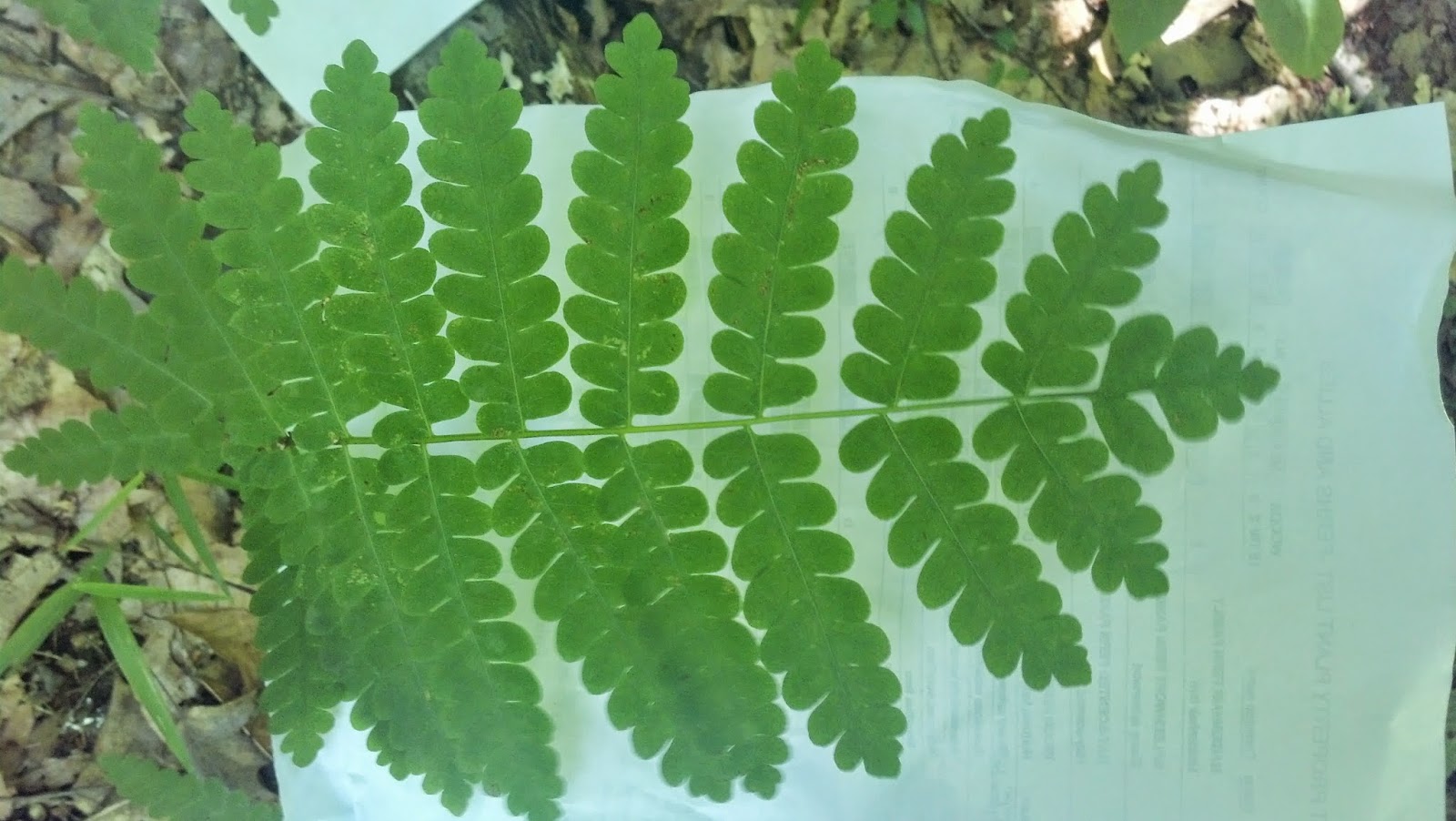 |
| Interrupted fern |
Lady Fern (Athyrium filix-femina) is a thrice-cut fern. It can grow between two and three feet tall.
 |
| Lady fern |
Marginal wood fern (dryopteris marginalis) gets its name because the sori are on the margins of the underside of the pinnules.
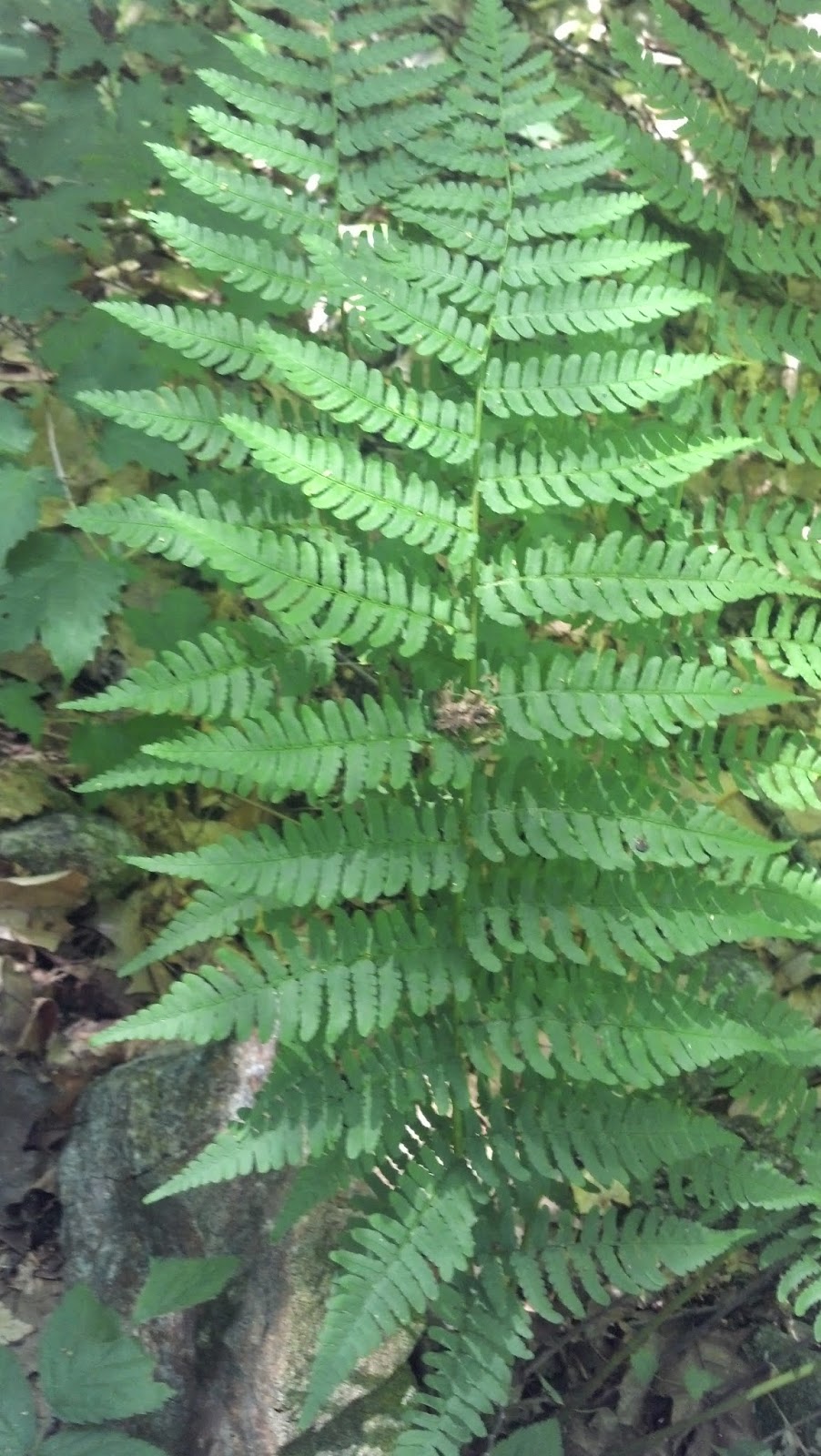 |
| Marginal Wood Fern |
The fronds of the New York Fern (Thelypteris noveboracensis) taper to its base. This is a twice-cut fern that grows to between one and two feet.
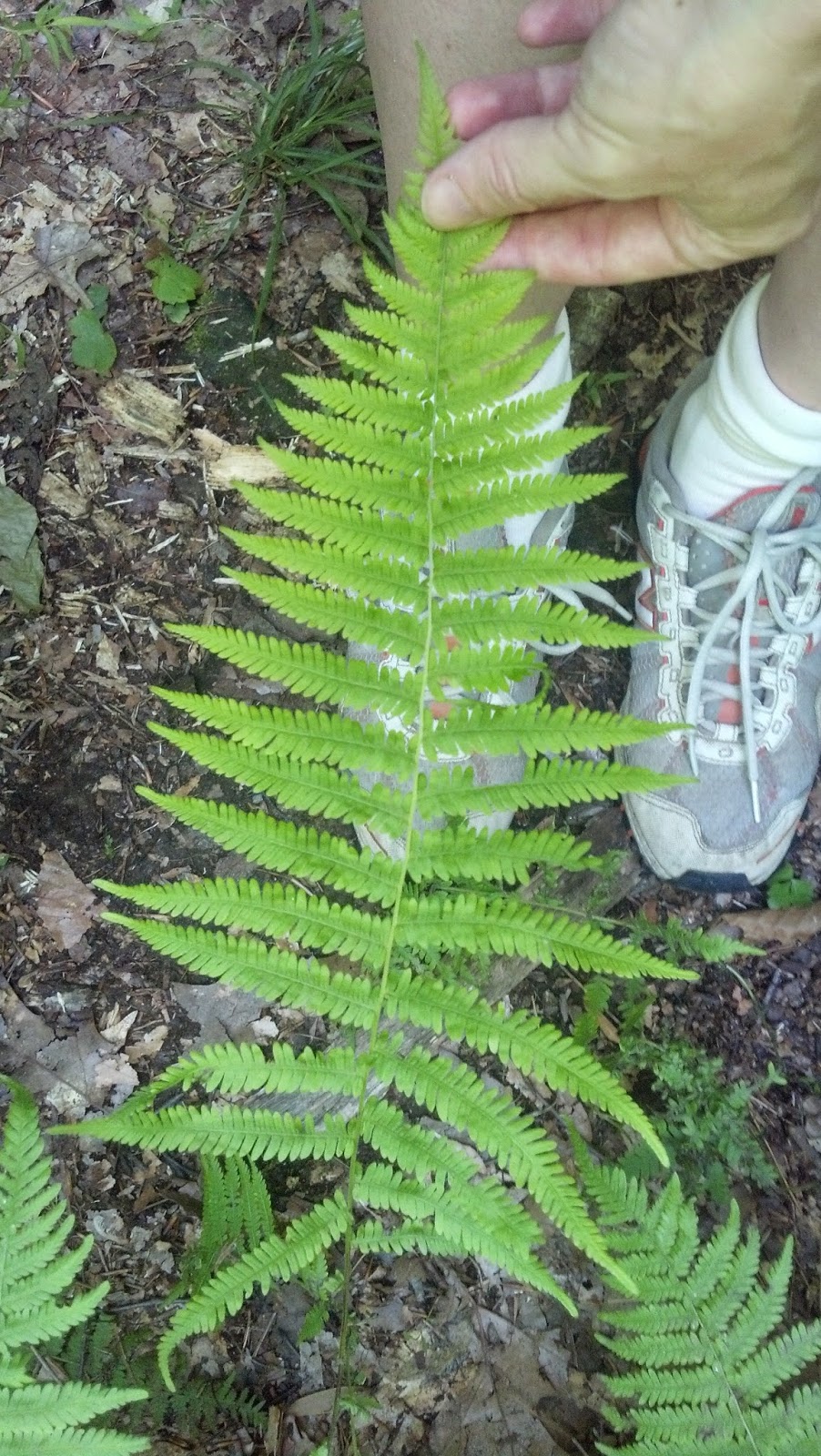 |
| New York fern--tapers to base |
The Cinnamon fern (Osmunda cinnnamomea) has woolly tufts at the bade of the fronds. It grows to between two and three feet.
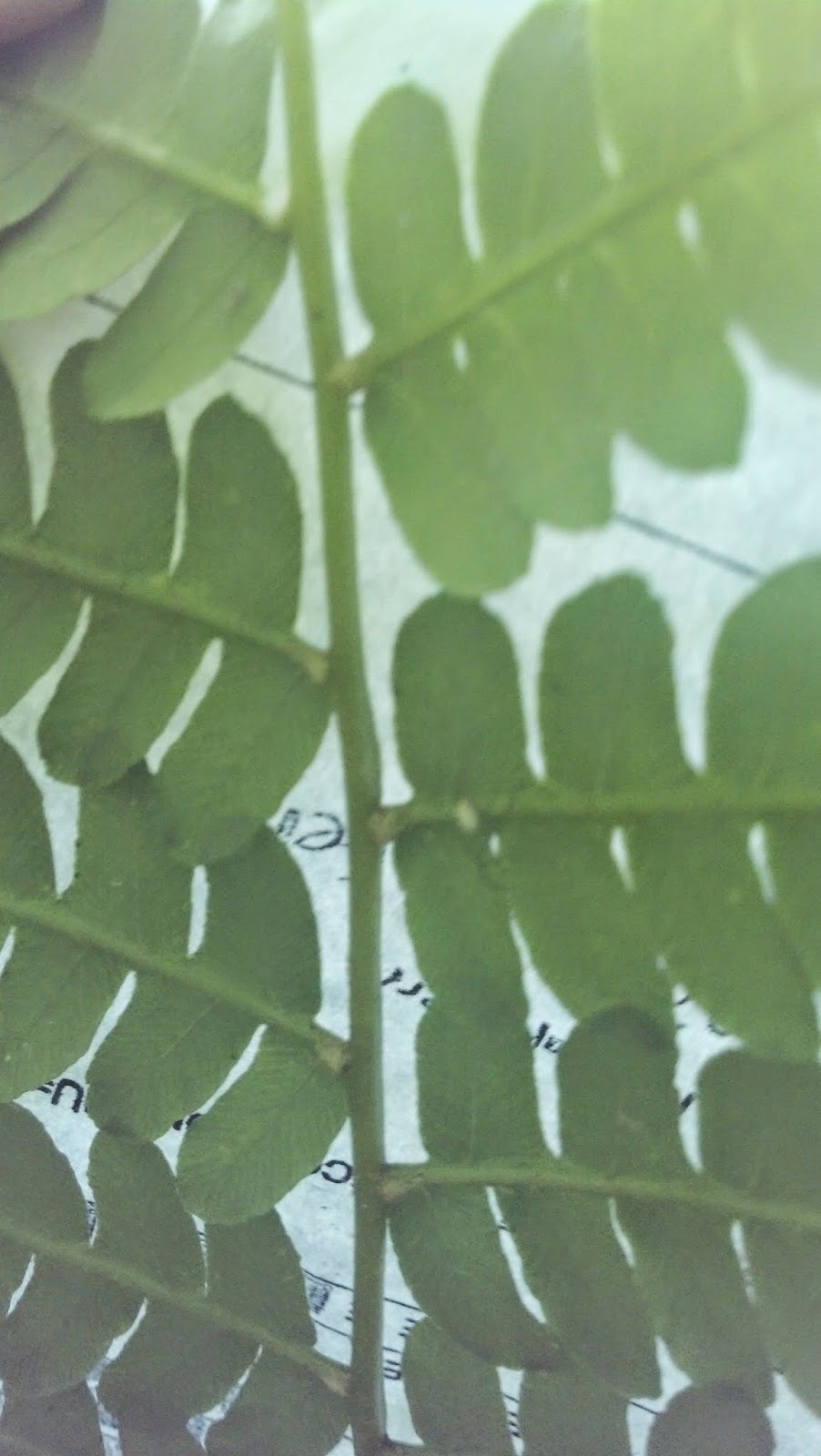 |
| Woolly tufts on the back of a cinnamon fern (where the leaf meets the stalk). |
 |
| Witch hazel (not a fern)--in the family Hamamelidaceae; usually a shrub but sometimes the size of a tree |
The Christmas Fern (Polystichium acrostichoides) is recognizable by the bootlike shape of its fronds. It is an evergreen fern that grows between one and two feet tall. It has sori only on its upper leaflets.
Two ferns that I did not get a picture of were
-the Maidenhair Fern (Adiantum pedatum), a twice-cut fern that grows between one and two feet tall. It is recognizable by its curved stalks
-the Sensitive Fern (Onoclea sensibilis), a once-cut fern that can grow up to four feet in height.
Another fern that we found a few days before at Ashland Nature Center was the Purple-Stemmed Cliffbrake (Pellaea atropurpurea).